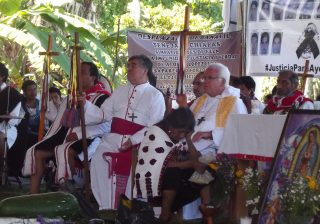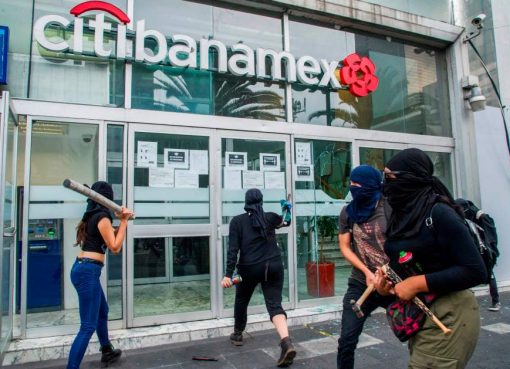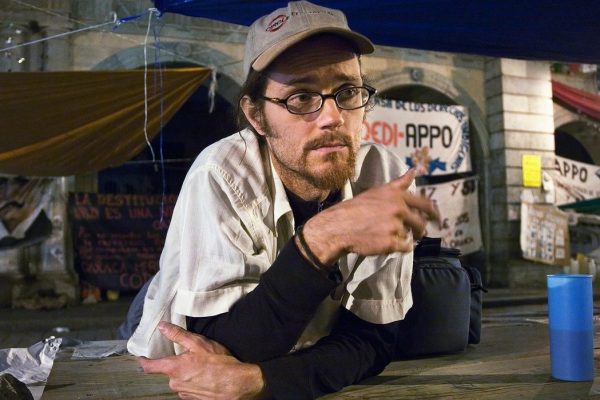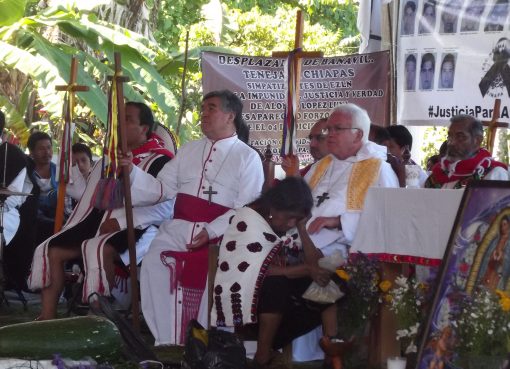
In this clip, Juan Manuel Martinez Moreno shares with us words of hope upon recently being release from prison. He was imprisoned for over 16 months for being wrongfully accused for the murder of Bradley Will, Indymedia journalist, who was documenting...
How to Help
or
Suggestions for Ongoing Solidarity
General suggestions for ongoing solidarity to participate in the struggle for social justice.
- Work in Solidarity
- Popular Education in the U.S.
- Promote a Fair Trade Economy
- Volunteer in Mexico
- Incorporate Mexico and the Indigenous Rights movement into your formal study program
Work in Solidarity
There are many different ways to work in solidarity with the people in Mexico Here are a handful of suggestions.
- Get involved with local existing Mexico solidarity groups or NGOs.
- Start a sister cities project with a community. The Autonomous Municipalities with existing sister city relationships are listed on Enlace Civil, which also explains a little bit about what this entails.
- Get active in campaigns to exercise political pressure on the Mexican government. These campaigns can include, but are not limited to, letter writing, email jamming, letters to the editor, Mexican embassy visits, press conferences, marches, etc. Timely issues are often disseminated through the Mexico Solidarity Network, Enlace Civil, Global Exchange, Sipaz and Witness for Peace.
- Network with other people who participated in your delegation to brainstorm about ways you can continue to work together.
- Raise money! In Chiapas, to support autonomous government programs in health, education, production, etc. We recommend giving the money directly to the Zapatista Juntas, since NGOs based in San Cristóbal and the U.S. have access to grants from international foundations. If you would like to support San Cristóbal-based groups, we recommend groups which strengthen indigenous autonomy through their actions, like the alternative technology groups which install drinking water systems, composting toilets and wood-saving stoves.
- Volunteer to translate for Chiapas or Oaxaca groups: the denuncias that come out of La Red de Defensores or Enlace Civil,, the bulletins published by CIEPAC, the videos produced by Promedios, etc.
- Send your photos back to Chiapas and Oaxaca, to be sent to the communities/subjects.
Popular Education in the U.S.
- Do a presentation or teach-in at your workplace, school, home, place of worship, community organization, etc. on your experience in Mexico. Incorporate multi-media such as slideshows, videos, photos, etc.
- Invite speakers to come speak at your university, place of worship, community center, etc.
- Take advantage of TV and radio access available to you: get on the air talking about Mexico at your local college or independent radio station or public TV station. Contact us for support with talking points.
- Write opinion pieces and articles for your local newspaper or any magazines or journals you have access to.
- Volunteer to distribute Promedios videos—to festivals, universities, faith-based groups, solidarity groups, public TV, etc. Help make a space for the communities´ voice to be heard. Use them for Spanish classes in schools. Host tours of media artists and activists. Request that your university´s library buy them to have as student resources.

- Keep yourself up-to-date by subscribing to a Mexico listserve.
Promote a Fair Trade Economy
- Promote fairly traded goods in your campus stores or local stores you can influence—not just organic goods but fairly traded as well. .
- Promote Fair Trade coffee: get your local cafés or coffeehouses to buy Zapatista or Oaxacan coffee through any of the many distributors listed in the Resource List. For more information on Fair Trade Coffe in general, see the advocacy campaigns listed in the Resource List.
- Promote the products of Chiapas and Oaxaca Women´s Artisan Cooperatives to local socially-responsible entrepreneurs. For more information on Zapatista womens´ cooperatives, contact the Juntas directly or through Enlace Civil.


Volunteer in Chiapas
When considering returning to Chiapas or Oaxaca to volunteer please think about what you will be offering to the movement: apart from returning for yourself and your own learning, how can you contribute? For people with short term volunteer possibilities, what will greatly increase your usefulness is fundraising before you come down. Once here you can then work on a project with that money in the communities, in accordance with the communities´ decisions as to how to use the resources. Lots of well-meaning people get down to Chiapas and Oaxaca and are frustrated when they find out how difficult it can be to find a constructive volunteer project. A few points to help avoid this:
- Be aware that if you don’t speak Spanish your usefulness will be quite limited (unless you can raise money).
- The longer you can commit to being in Chiapas the more interested people will be in working with you. Do not have high expectations if you only have a short amount of time to volunteer.
- Make concrete proposals well in advance to people you want to work with: what skills do you have and how can they be applied to already existing projects? Don’t expect them to find you ¨something to do¨.
- Be pro-active without being overbearing. Take initiative and volunteer to do things when you see something you can help out with (translation is a great example) but always get the express authorization of the people responsible beforehand.
Examples of things volunteers do in Chiapas and Oaxaca: translating, human rights observation/peace camping, video production work, administrative and organizational work, research and writing, installation of drinking water systems, popular education workshops in communities on reading and writing, computer literacy, basic bookkeeping, etc.
Incorporate Mexico and the Indigenous Rights movement into your formal study program
- If you are a college student, do an independent study or request a course on Zapatismo, the history of Mexican social and indigenous movements, etc. We can support you with syllabus recommendations.
- Consider coming to Mexico to do a study abroad program: a couple are listed in the resource list but there are many more, check with your university’s Study Abroad office.
- Study Spanish at the Spanish language school in Caracol II, Oventik—you might even be able to get school credit.


Follow CASA's stories and events via Facebook and Twitter.